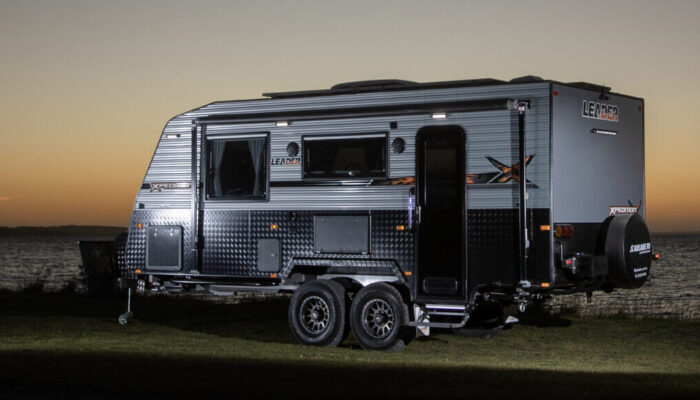



Single Axle vs Tandem Axle Caravan: What’s the Difference (and Which One’s Right for You)?
Choosing the right caravan is one of the biggest decisions you’ll make before hitting the open road – and one of the most common questions we hear at Adelaide RV is: should I go a shorter single axle van, or a longer tandem axle caravan? David from Adelaide RV recently broke this down in a simple, practical way – and it’s something every buyer should understand before committing to a van length, axle setup, and tow vehicle.
In this guide, we’ll walk through the real-world differences between a single axle vs tandem axle caravan, including towing feel, reversing, running costs, space, stability, and who each style suits best.
Single Axle vs Tandem Axle Caravan: The Core Difference
At its simplest:
- Single axle caravans usually sit in the shorter length range and run two wheels total
- Tandem axle caravans (dual axle) are typically longer and run four wheels total
But the axle count affects far more than just appearance – it changes how the caravan behaves on the road, in caravan parks, and even how it feels when you’re standing inside it.
Why Single Axle Caravans Are So Popular (Especially for Couples)
David highlights one of the most popular shorter formats Adelaide RV sells: a Supreme 17’6 full-height single axle caravan – and importantly, you’re not sacrificing comfort like you might with a pop-top.
1) Easier reversing and manoeuvrability
One of the biggest wins for a single axle van is how agile it is.
Because it pivots more easily, reversing into a tight caravan park site is far simpler. David explains that when customers need to get into a tight spot, the shorter single axle is “so agile” and easier to position exactly where you want it.
If you’re new to towing, this is a massive confidence booster.
2) Lower running costs
A key practical advantage in the single axle vs tandem axle caravan debate is ongoing costs. With a single axle you’re maintaining:
- Fewer tyres
- Fewer bearings
- Less rolling resistance
David notes this often means slightly better fuel consumption and lower tyre and bearing maintenance costs.
3) Lighter towing weight (more tow-vehicle friendly)
Single axle caravans generally sit lighter – and that can make a huge difference if you don’t have a heavy-duty tow rig. For example, David explains the weights of a van around this size can be roughly:
- ATM: ~2.7–2.8T
- Tare: ~2.2–2.3T
That puts it in a comfortable towing range for many Australians who want a capable touring setup without jumping into the heavier end of the market.
4) You’re not necessarily “giving anything up”
This is the surprising part for many buyers. David points out that even at 17’6, you can still get:
- A north-south bed
- A full ensuite
- A smart layout like an L-shaped lounge
- A kitchen positioned to enjoy the view under the awning
In other words: smaller doesn’t mean basic – if the floor-plan is designed well.
The Downsides of Single Axle (Shorter Vans)’
Of course, no caravan size is perfect.
1) Less internal space
David is very clear here: the biggest negative is simply space. While many features from bigger vans are still included, everything is more condensed. That means:
- If you’re a bigger couple, you may feel like you’re in each other’s way
- If friends come over for cards or dinner, it can feel “a bit squeezy”
And he makes a great point: space is hard to judge online. The best way is to physically stand inside the van.
2) More movement when parked
Another interesting point David raises: in a single axle van you can notice more movement when standing inside. It’s not dangerous – but it’s noticeable. With only one axle contact point, the van has slightly less “base stability” compared to a tandem axle.
Tandem Axle Caravans: When Bigger Really Shines
Now let’s step up into what many buyers dream of: the bigger, roomier touring experience. David uses a popular example: a tandem axle 21’6 Supreme Classic Tourer.
1) More stability on highways and freeways
In the single axle vs tandem axle caravan comparison, this is where tandem axle really wins. David explains the dual axle setup provides:
- A more stable towing feel
- Smoother highway behaviour
- Better tracking at speed
This is particularly important for South Australian conditions – long highway stretches, open crosswinds, and touring distances where stability matters.
2) Higher payload and carrying capacity
A tandem axle van usually carries more weight and offers more payload flexibility. David’s example sits around:
- Tare: ~2.6T
- ATM: ~3.2T
That’s a significant step up – which is great if you’re adding:
- Extra solar/batteries
- Bigger fridges
- More water storage
- Extra gear for off-grid touring
3) More living space (and more luxury)
Step inside a tandem axle van and the difference is immediate. David highlights features that become possible with the extra length:
- Side club lounge
- Bigger bench space
- Extra cabinetry/storage
- Larger ensuite layouts
- Better bed access and movement around the bedroom
For couples who spend long periods travelling, that extra breathing room can turn a caravan into a true home-on-wheels.
Tandem Axle Reversing: Easier or Harder?
This is where it gets interesting. David explains that tandem axle caravans react slower when reversing – which can actually be helpful for some people. Instead of sharp, quick movements, you get:
- A wider turning arc
- more gradual response
- less “over-correction panic”
The trade-off? You generally need:
- More room
- More patience
- More planning
Single Axle vs Tandem Axle Caravan: Safety & Blowouts
This is a common concern online – but David gives a grounded perspective. He notes that with good quality tyres (especially on quality Australian-made caravans), blowouts aren’t as common as social media might suggest. However, in the event of a blowout:
a tandem axle does provide more security because there’s still another wheel/axle supporting the van in extreme cases, David mentions you could “limp back to civilisation” if needed (not recommended, but it’s an added safety buffer) Either way, if a tyre fails – you’ll be pulling over immediately.
Tow Vehicle Requirements: A Big Decision Point
Before you fall in love with a big tandem axle layout, David stresses one crucial question:
Can your vehicle tow it safely and legally?
Most tandem axle caravans require a vehicle with:
- 3.5T towing capacity
- A suitable GCM (Gross Combination Mass)
So if you’re shopping for a new tow vehicle, make sure the caravan choice is part of the decision – not an afterthought.
Best Caravan Size for Families (It’s Usually Bigger)
When it comes to family vans, David says it clearly: space is at a premium. If you’re accommodating kids, bunks, and constant movement in/out of the van, a longer tandem axle family van often makes life easier. He mentions popular family options like:
- 19’6 bunk vans (still practical but compact)
- 22’6 double door layouts with mid-ensuite designs
- Larger 25ft vans with quad bunks (big tow job, but huge inside)
Final Thoughts: Which One Should You Choose?
Here’s the simplest way to decide:
Choose a single axle caravan if you want:
- Easier reversing and tight-site manoeuvring
- Lighter towing weights
- Lower running costs
- A great couples setup without “going huge”
Choose a tandem axle caravan if you want:
- More internal space and storage
- Better highway stability
- Higher payload for off-grid upgrades
- Family-friendly layouts with bunks and zones
And David’s best advice? Come into the yard and stand inside both styles. It’s the fastest way to understand what feels right.