



Caravan Weights Explained: Understanding the Caravan Numbers Before You Tow
If you’re in the process of buying a caravan or looking to upgrade your tow vehicle, you’ve probably come across a barrage of confusing abbreviations – ATM, GVM, Tare, GTM, GCM – and wondered what they actually mean.
In this post, we’re demystifying the caravan world with caravan weights explained clearly and simply. Jeb from Adelaide RV breaks it all down so you can hit the open road with confidence, knowing your caravan setup is safe, legal, and perfectly matched to your vehicle.
Why Caravan Weights Matter
Towing a caravan isn’t just about hitching it up and heading off. Understanding caravan numbers is crucial to staying safe and compliant with Australian regulations. Each figure – whether it’s the weight of your empty caravan or the maximum it can carry – affects how your vehicle performs, handles, and brakes on the road.
Let’s get into the details.
Caravan Weights Explained: Key Terms You Need to Know
1. Tare Weight (or Dry Weight)
The tare weight is the empty weight of your caravan as it rolls off the manufacturer’s production line. It includes permanent fixtures such as the mattress, water tanks (empty), batteries, gas bottles (empty), and toilet cassette. It does not include water or gas inside those tanks and bottles.
This figure is crucial because it sets the foundation for all other calculations.
2. ATM – Aggregate Trailer Mass
ATM is the total weight your caravan can legally weigh when fully loaded. It includes the tare weight plus everything you add – water, gas, food, clothing, furniture, tools, and any optional extras.
The ATM is determined by the manufacturer based on factors like:
-
Braking system capacity
-
Suspension and axle strength
-
Tyre and chassis ratings
3. Payload
This is the difference between your caravan’s ATM and its tare weight. In other words, payload is how much you can safely load into the caravan. Everything from camp chairs and cooking gear to annexes and clothes needs to fit within this number.
As a rule of thumb:
-
Couples should allow for around 140 kg of personal gear
-
Families should add 30 kg per child

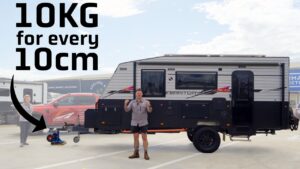
4. Ball Weight
Ball weight (or tow ball mass) is the vertical weight the caravan places on the vehicle’s tow ball when hooked up. This changes depending on how the caravan is loaded, and must be accounted for in your vehicle’s GVM (more on that soon).
Car manufacturers provide:
-
Tow ball weight at tare
-
Maximum allowable tow ball weight (often around 350 kg)
If you load up the front boot or add accessories like pole carriers or generators, your ball weight can increase quickly—so it’s wise to weigh it before every trip.
5. GTM – Gross Trailer Mass
GTM is the weight supported by the caravan’s wheels when it’s fully loaded and attached to your vehicle. It is essentially ATM minus the ball weight.
What About the Tow Vehicle?
Now let’s shift focus to your vehicle – the other half of the towing equation.
6. Curb Weight
This is the vehicle’s tare weight – its empty weight straight from the manufacturer, without passengers or cargo.
7. GVM – Gross Vehicle Mass
GVM is the maximum weight your vehicle can legally carry, including:
-
The driver and passengers
-
Fuel
-
Accessories like bull bars, roof racks, fridges
-
And importantly, the ball weight from the caravan
8. Payload (Vehicle Side)
Similar to the caravan, vehicle payload is the GVM minus curb weight. Everything added to your car – including you, your family, and the caravan’s ball weight – must fit within this allowance.
The Final Piece: GCM – Gross Combined Mass
GCM is the total legal weight of your fully loaded tow vehicle plus your fully loaded caravan. This figure is set by your vehicle manufacturer and is commonly around 6,000 kg, though it can vary (and in some cases, be upgraded).
This is often where people get caught out. Even if your car and caravan are individually within their limits, the combined weight might push you over the line.
How to Find These Numbers
Most of these figures are available on your caravan’s VIN plate, which includes:
-
Tare weight
-
ATM and GTM
-
Ball weight at tare
-
Load carrying capacity
-
Tyre and rim specs
You can also find your vehicle’s curb weight, GVM, and GCM on the manufacturer’s compliance plate or handbook.
Need help doing the calculations? Head over to our handy weight calculator to ensure you’re towing safely and legally.
Final Thoughts: Don’t Get Caught Out
Understanding caravan weights isn’t just about compliance – it’s about safety. Overloading your caravan or vehicle can affect braking, stability, and tyre wear, putting you and others at risk.
So before you hit the highway:
-
Know your tare, ATM, GTM, and ball weight
-
Calculate your caravan and vehicle payload
-
Double-check your GCM
-
Load smart and weigh regularly
There’s a bit to learn, but with caravan weights explained clearly, you’ll be more confident, capable, and ready for that next great Aussie road trip. If you want to get your van professionally weighed, head to our friends at Road Ahead Mobile Weigh who’ll be able to break down exactly how much your van weighs, how to pack your van, and what you can do if you’re overweight.


